Electrocalorics
Electrocaloric energy conversion


State of the art
- New solid-state cooling technology, particularly promising for micro-cooling applications
- It offers enhanced efficiencies while utilizing a safe, environmentally friendly, non-toxic, solid-state refrigerant
Our focus
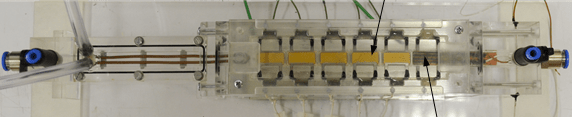
- Development and optimization of electrocaloric regenerative devices
- Measurements of electrocaloric effect and fatigue-life of electrocaloric materials and device components
- Development and innovation of electrocaloric micro-cooling devices
Electrocaloric cooling is based on the electrocaloric effect, a phenomenon where a material undergoes a reversible temperature change when an electric field is applied or removed. Typically, the electrocaloric materials are ceramics or polymers, known for being environmentally friendly. One of the key advantages of electrocaloric technology is that it does not require any moving parts, leading to silent and vibration-free operation. This unique characteristic makes electrocaloric cooling elements exceptionally suitable for miniaturization, significantly broadening their use in diverse cooling applications . These range from microelectronics and microrobotics to large-scale cooling systems in industrial processes, energy production processes, and even aerospace technology!
Experts in the field


